AI Board Governance in Practice: A Framework for Board Readiness and AI Oversight

Updated: Jun 27

On March 19, 2025, WOMEN x AI partnered with the Silicon Valley AI Hub to host AI Board Governance in Practice, an interactive workshop focused on one of the most pressing questions facing boards today: How prepared are we to govern AI?
As organizations accelerate AI adoption, boards are increasingly being asked to provide oversight on topics ranging from AI strategy and risk management to workforce readiness, governance, and stakeholder impact. Yet many directors are still searching for practical frameworks to help guide those conversations.
To address that challenge, participants worked through the AI Board Governance Compass, a framework developed by Paula Fontana, Tamara Gracon, Reut Lazo, Jenny Kay Pollock, and Joanna Ridgway to help boards evaluate their readiness across four critical dimensions: Individual, Board, Organization, and Stakeholder.
The session combined board-level discussion, hands-on exercises, scoring activities, and a case study designed to help participants move from theory to practical application.
A special thank you to the Silicon Valley AI Hub for hosting and sponsoring the event and to everyone who contributed their perspectives during the workshop.

If You Only Remember Three Things
|
Highlights from the Evening
The workshop brought together board directors, executives, venture partners, and governance-focused leaders for an evening of discussion, learning, and hands-on application.
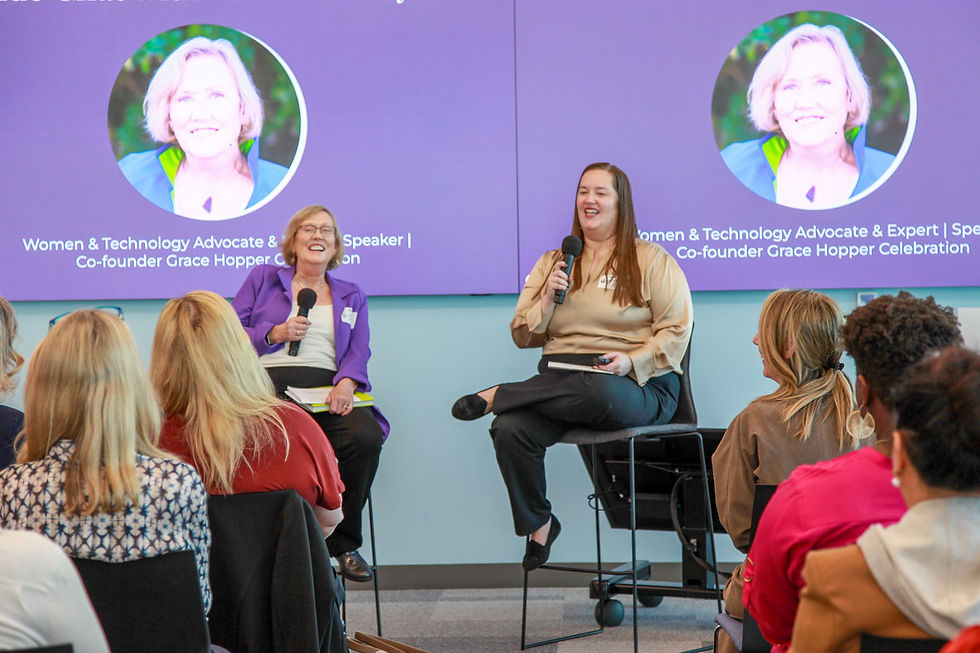
The evening opened with a fireside chat featuring Telle Whitney, co-founder of the Grace Hopper Celebration and author of Rebooting Tech Culture, who shared perspectives on leadership, culture, and the evolving role of boards in overseeing emerging technologies.

Attendees also heard from board director Tamara Gracon and investor and board leader Mandy Bynum, who discussed the realities of AI oversight in today's boardrooms, including risk management, governance responsibilities, and the questions directors should be asking management teams as AI adoption accelerates.
Participants then worked through the AI Board Governance Compass in small groups, applying the framework to a realistic case study, scoring board readiness, and discussing governance priorities. The session concluded with group reports and a broader discussion about what effective AI oversight looks like in practice.
While perspectives varied across the room, one theme surfaced repeatedly: boards are increasingly expected to oversee AI, but many are still searching for practical tools and frameworks to help guide those conversations.
The following resources were used during the AI Board Governance in Practice workshop and are available for continued learning and board discussion. The AI Board Governance Compass Is comprised of four quadrants individual, board, organization and stakeholder. Each of them has 4 sub components for a total of 16 elements that boards should score themselves on.

Associated Scoring Sheet
The AI Board Governance Compass Scoring Sheet is designed to help you evaluate where your board needs to focus when it comes to AI.
The sheet will open in Google Docs, go to File > Make a Copy so you can edit it.

Case Study DataFlo Solutions 2.0
Use the case study to apply the AI Board Governance Compass in a small group setting. Act as you are on the board of DataFlow Solutions.

You can download a printable version of Case Study 2.0 below:
During the workshop, participants worked in small groups to apply the AI Board Governance Compass to the DataFlow Solutions case study.
Each table evaluated the scenario through the lens of board oversight, governance, organizational readiness, and stakeholder impact before sharing recommendations with the broader group.
The exercise helped move the conversation beyond theory and gave attendees an opportunity to practice using the framework in a realistic boardroom setting.
What We Learned
One theme surfaced repeatedly throughout the workshop: many boards understand that AI will impact their organizations, but fewer feel confident evaluating their own readiness to govern it.
The AI Board Governance Compass helped participants identify strengths, uncover gaps, and prioritize areas for further discussion. Rather than focusing solely on technical AI knowledge, conversations frequently centered on governance processes, board education, risk management, organizational preparedness, and stakeholder impact.

Several groups reached similar conclusions. Effective AI governance requires more than understanding the technology itself. Boards must also evaluate whether the organization has the right oversight structures, decision-making processes, accountability mechanisms, and leadership alignment in place.
The result was a more structured approach to AI oversight and a shared language for discussing AI governance in the boardroom. For many participants, the workshop provided not only a framework for evaluating AI governance, but also a practical starting point for bringing more structured AI discussions into the boardroom.
Event Slides
Rebooting Tech Culture

We were honored to give away 4 signed copies of Telle Whitney's book, Rebooting Tech Culture. If you weren't one of the winners it is available for purchase.
Telle Whitney also highly recommended checking out Nora Denzel's Substack: Nora's Top 6 Recommendations for Board Members to Become more Familiar with AI
Related AI Governance Resources
AI Board Governance Compass White Paper – Download the full framework and supporting materials.
WOMEN x AI membership – Join a community of leaders exploring AI governance, adoption, and responsible innovation.
How to Integrate AI Into the Board Agenda: A Practical Guide for Directors – Learn practical ways to bring AI discussions into the boardroom.
AI Governance: Insights for Business Executives and Board Leaders by Moha Shah – Explore governance frameworks, emerging regulations, and leadership considerations for AI adoption.
Interested in continuing your AI governance journey? Explore the resources above and join the WOMEN x AI community to connect with leaders navigating AI oversight, adoption, and responsible innovation.