AI Career Lab Recap: Career AI Tools, Advice and Your Next Move

Updated: Sep 24

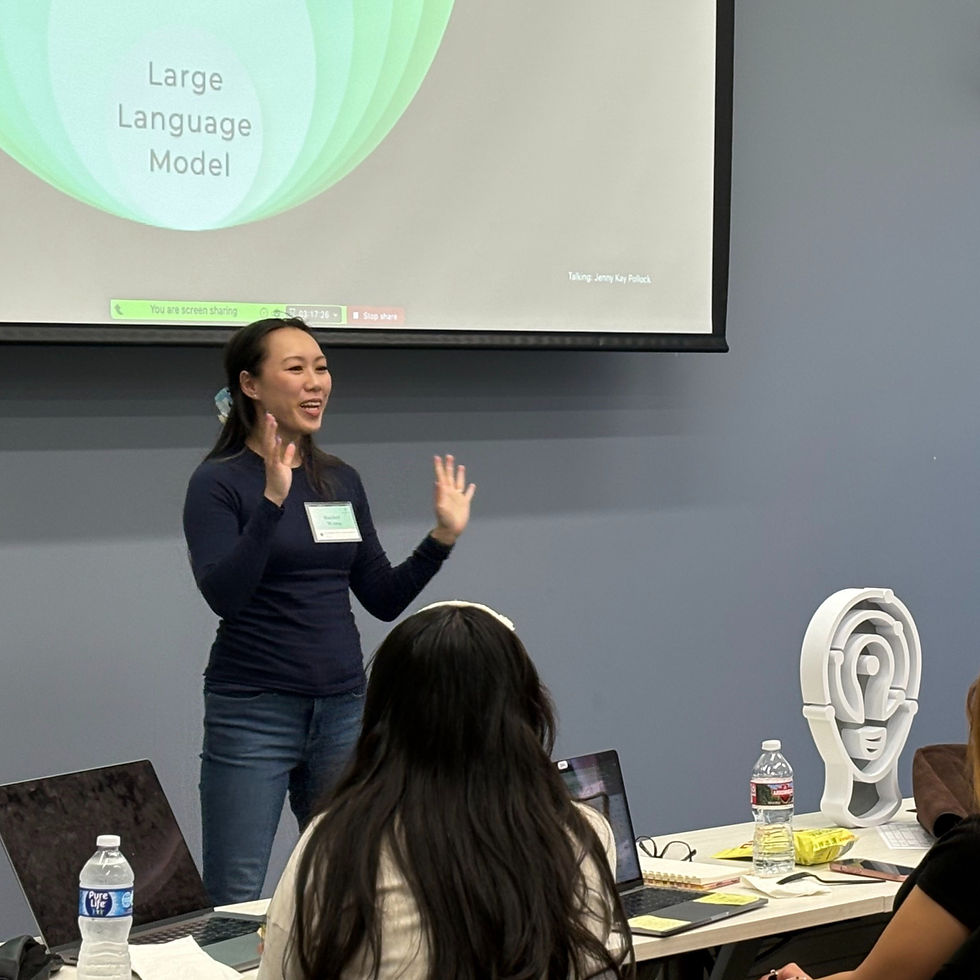
At WOMEN x AI’s AI Career Lab: Your Next Move on September 23, 2026 we brought AI tools, hiring experts, and community into the same room to help women take a practical step toward their next opportunity.
What stayed with us was how women helped eachother in real time. They shared tips and leads, offered résumé reviews, and helped each other think through what to do next. Our hiring panel brought candid answers to the questions in the room.
Use AI to decide which opportunities deserve your energy
Laura Liu Cruickshanks shared how she used AI during her move from product design into community building. She built a career hub that helped her evaluate roles, prepare applications, and remember what happened. For each opportunity, AI could help her decide: apply, investigate, or pass.
The memory mattered as much as the recommendation. Laura's AI tracked why she passed on roles, whether the travel was too much, the scope was unclear, or the work was too narrow. That meant she did not have to evaluate the same kind of role from scratch each time.
Her advice for trying this yourself: start with your story, not the job description.
Tell your AI thought partner about your experience, strongest work, ideal role, constraints, and deal breakers. Then share a posting and ask it to explain its recommendation without inventing experience. Laura demonstrated this approach with PromptQL’s Playground.
You can follow Laura's process in Your Next Move: How to Use AI for Your Job Search.

Make your introduction easy to forward
Meg McWilliams showed us why a promising introduction can stall even after someone says yes to helping. A long, vague, or buried request gives a busy connector more work to do.
Her test: Could this person forward your email from their phone, with little or no editing?
Write a new email with a subject line that makes sense when forwarded. Keep it under 100 words and make one ask per message.
Include three things:
Who: Your linked name and company or role, plus a brief credential.
Proof: One line showing why the contact might want to meet you.
Context and ask: What you are working toward, why this particular contact, and the specific conversation or introduction you want.
If you want three introductions, prepare three separate emails that are customized and forwardable. Meg also showed how AI can draft a first version, then review it from the perspective of a busy connector: Where would you have to stop, think, or rewrite before forwarding this? Personalize the final version so it sounds like you.
Our ask: Think of one woman you met at AI Career Lab. If you offered her a lead, résumé review, introduction, or advice, follow through this week. Make your message specific enough that she knows the next step.

Make LinkedIn point toward your next role
Hava Maloku encouraged us to treat a LinkedIn profile as a landing page for where we want to go. Start with the target role and the words recruiters actually use to find it. Then ask whether a stranger could tell what you do and what you want next within five seconds.
For a headline, Hava offered a practical structure: target role + value you bring + proof or specialty.
In your About section, lead with your direction, back it up with results, include relevant skills, and end with what you are open to.
Her AI profile review prompt compares your profile with three target job postings. It asks what role your profile appears to point toward, which keywords are missing, and how to make your headline and experience more relevant. Review every suggestion against the facts. Your profile still needs to sound like you.

What did the hiring conversation make clearer?
Our panel answered candid questions about résumés, referrals, LinkedIn, and how candidates get noticed. Malinda Johnson of Conversa shared a concrete example of a bold, specific experiment: include thoughtful product suggestions when applying, then send a relevant LinkedIn message to the hiring manager. It is a way to show how you think and why you care about that company.
There is no single tactic for every role. The useful question is: What can you do that helps a hiring team see your your fit?
Event Slides
Partner resources
Toast: Join Toast’s talent pool to explore opportunities and stay connected. You can also create a free profile in Toast’s talent portal for personalized job recommendations, application tracking, and its AI career assistant.
PromptQL: Read Your Next Move: How to Use AI for Your Job Search, then try PromptQL’s free Playground. You can also join the waitlist for its Decision Bot Architecture + Hackathon.
Ladies Get Paid: Explore its free career resources.
Coached: Explore the free AI Impact Map to consider how AI may affect your work and where to focus next.
Jobscan: Compare your résumé with a job description and review the match report. Jobscan says the initial report is free.
Resume Worded: Explore its résumé and LinkedIn feedback tools. Keep the attendee discount code in the email only.
Celebrating the community

Thank you to our sposor E6 Software, our speakers and partners, volunteers, and everyone who shared a lead, offered feedback, answered a question, or made a connection.
Our partners helped us give away four copies of Claire Wasserman’s Ladies Get Paid, a WOMEN x AI self-care candle kit, and a gift of wellness from THE NOW Massage Emeryville.
We also gave away two scholarship seats to our AI Advantage: Essentials for Leaders, 5 week online cohort starting October 2.

Your next step: Follow up with one woman you met. Make good on one offer of help. Bonus step for job seekers: join Toast’s talent pool to stay connected to opportunities. One conversation can change what happens next.