Inside AI Advantage: Using AI to Find Your Next Opportunity

By Jenny Kay Pollock, Co-Founder and Co-CEO of WOMEN x AI.
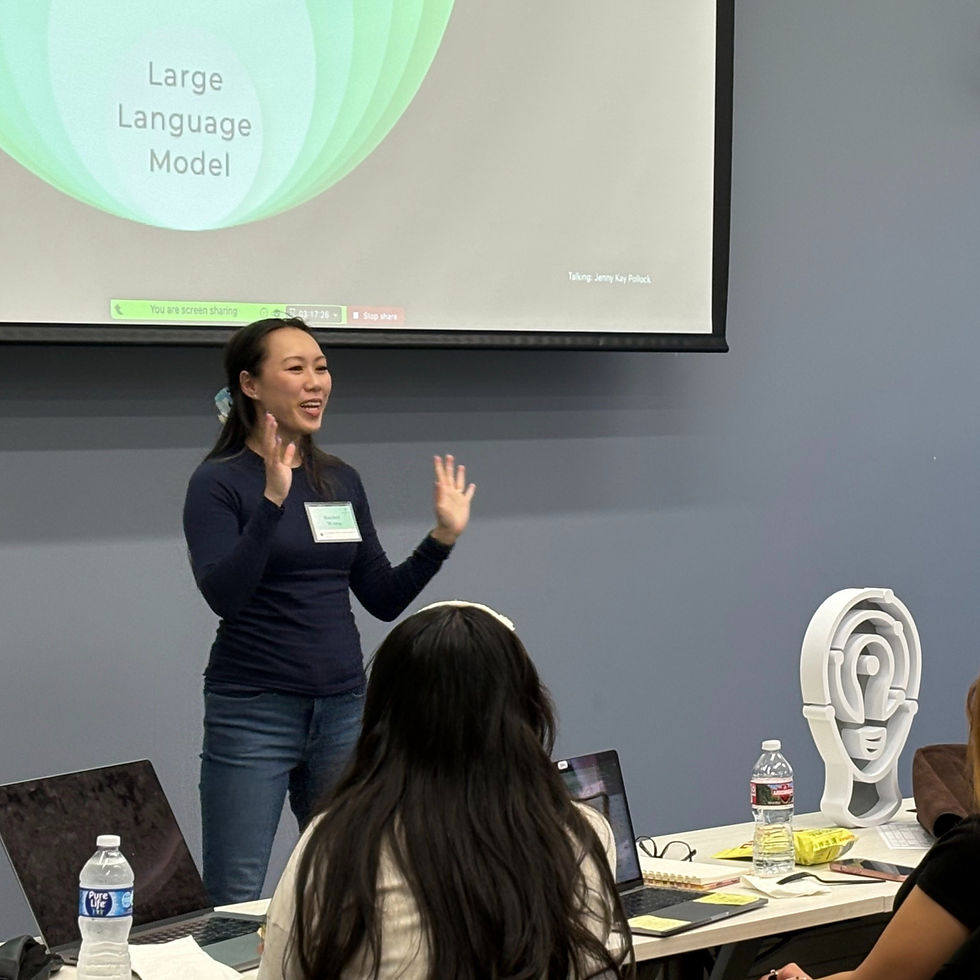
Program contributors: Jenny Kay Pollock and Reut Lazo, Lead Facilitators; and Rachel Wong, Principal Learning Architect and Cohort Facilitator.

What could AI help you see in your own experience?
An accomplishment you haven’t explained clearly. A strength that appears repeatedly in recommendations from colleagues. A connection who could help you explore a new direction.
AI can support career development by helping you identify relevant opportunities, explain your accomplishments, and prepare for conversations. In Week 3 of AI Advantage, women practiced these approaches while considering accuracy, privacy, and the next action their research would support.
On October 16, 2026, Week 3 of AI Advantage, WOMEN x AI’s five-week learning cohort, focused on researching opportunities with AI. The session combined career and board opportunity research, résumé and LinkedIn development, and small-group capstone support.
Participants brought their own résumés, professional materials, and career questions into the session. That made room to work through the details: what context to give an AI tool, whether its response reflected their experience, and what to try when the output wasn’t useful.
Throughout the session, the conversation kept returning to a practical question: how can this help you move toward what you want next?
Start with the experience you bring
Rachel encouraged participants to think about which accomplishments deserve the most attention on their résumés.
“Order your list of resume bullets in order of like what you would want interviewers to ask you about.”— Rachel Wong
That gives résumé editing a clear purpose. Which achievement opens a conversation you want to have? What does it show about your judgment, skills, or contribution?
Rachel demonstrated how AI can help participants describe their work more clearly, compare a résumé with a job description, and identify experience that needs more explanation.
One useful approach is to ask the AI to interview you. Follow-up questions can help surface the details behind a project: what you owned, why a decision mattered, and what changed because of your work.
The substance comes from your experience. AI can help you find the language to communicate it.
Look for strengths you may be overlooking
A participant raised an interesting possibility: could recommendations from colleagues reveal strengths she wasn’t emphasizing in her own professional materials?
Someone else’s description of your work may highlight something you take for granted. Perhaps people consistently recognize your ability to bring teams together, explain complex ideas, or move a difficult project forward.
Comparing those recommendations with your résumé or LinkedIn profile can help you spot a gap between the value others see and the story you tell.
It also gives you something concrete to investigate. What examples support that strength? Where would it matter in the opportunities you’re pursuing?
Consider where your expertise could contribute next
Jenny and Reut shared their own paths into board service, including how relationships and contributions helped create opportunities.
Their experiences opened up a broader discussion about where participants’ expertise could be useful. An operator’s understanding of customers, growth, technology, or organizational change may have value beyond her current role.
Jenny demonstrated how a sequence of AI prompts could help narrow a search by industry, organization type, investment focus, geography, and relevant people.
“The more context you can give about you and your goals, the better results you’re going to get.”— Jenny Kay Pollock
The quality of that research depends on the context you provide. A clear description of your experience and interests gives you a more useful starting point for evaluating possibilities and deciding whom to approach.
For more on this approach, explore using AI tools to land a board seat.
Build around the way you work
Reut demonstrated a custom job-search agent she developed through several evenings of experimentation.
Her tool brought together potential roles, reasons for fit, gaps, suggested next actions, and relevant connections from her network. She described learning as she built, asking questions and refining what she wanted the tool to do.
“I kept like adding to it and added to it until I got to a point that it looks this great.”— Reut Lazo
Seeing a working example was a starting point. Participants could ask Reut about her decisions, compare approaches, and consider which parts would be useful for their own goals. They also had time to work on their projects with facilitators available for questions.
The discussion surfaced another approach. A participant working on her own tracker found that a straightforward table met her needs, even without a polished interface.
That is a useful decision to practice: what would make this tool useful enough for you to act on?
For one person, it may be a customized research workflow. For another, it may be a simple shortlist she can review and use.
Keep the opportunity in view
One of the most candid moments came when a participant acknowledged how easily building a job-search tool could absorb time that might otherwise go toward applying.
It was a familiar tension: researching, experimenting, and improving a system can feel productive. Connecting that effort to the intended outcome takes another decision.
What will you do with the result?
Send an application? Prepare for an interview? Reach out to someone? Explore a board opportunity?
AI can support each of those steps. Choosing and taking the step remains part of the human in the loop work.
Be intentional about the information you share
The session also included questions about uploading professional materials and LinkedIn connection data.
Participants discussed removing unnecessary information, including email addresses, and understanding how a tool handles the data provided to it.
That conversation belongs alongside the possibilities. Before adding a file, consider what information the task actually requires, especially when the file includes other people’s details.
Useful context starts with a deliberate choice about what to include.
Make progress on something that matters to you
Reading about an AI approach can give you an idea. Applying it to your own work brings up questions.
What information should you provide? Does the output accurately reflect your experience? Is the tool helping you move forward? What should you change when it misses the mark?
AI Advantage creates space to work through those questions.
During Week 3, participants brought their professional materials and goals, tried approaches introduced in the session, and worked on capstone projects with facilitators available for support. Small-group conversations helped women compare tools, troubleshoot, and connect with others working on similar challenges.
The weekly challenge was concrete: make one update to a résumé or LinkedIn profile using what you learned.
Across the five-week program, participants develop a capstone connected to their own goals. Guided exercises, prompt packs, live conversations, and facilitator feedback help them turn their curiosity into work they can build on.
What would you like to make progress on with AI, and where would support help you move forward?
Inside AI Advantage shares selected insights from WOMEN x AI’s live learning cohort.